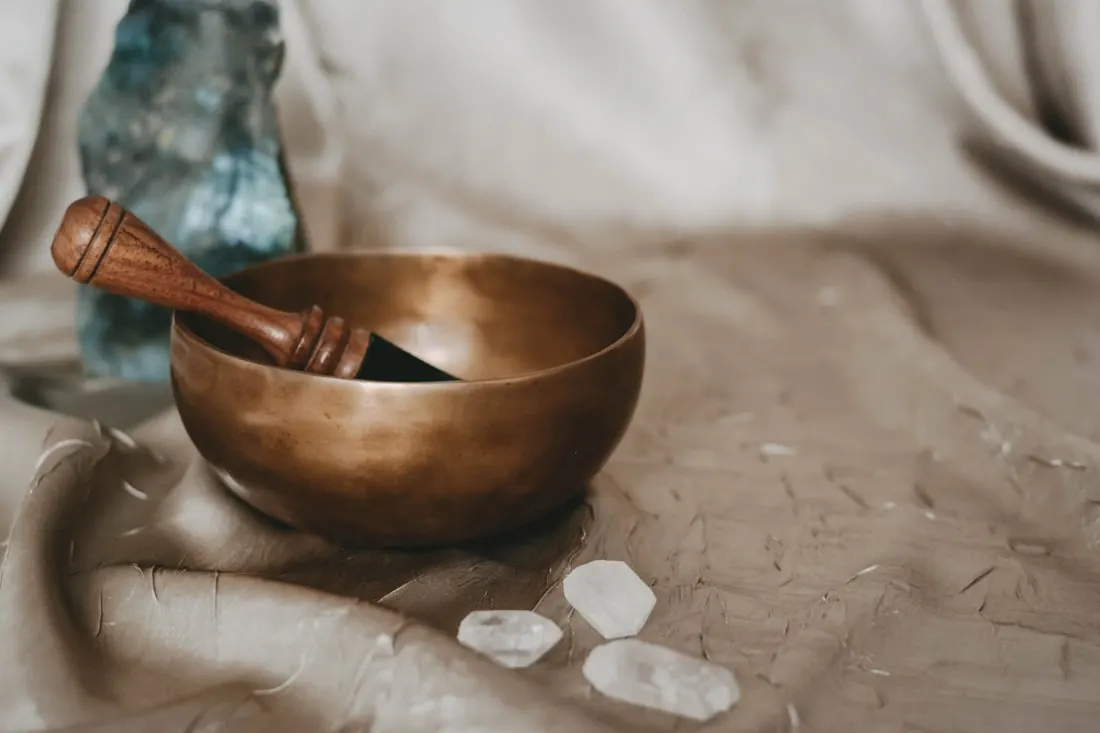
Ten minutes, one recording or one bowl, at the same time daily. If you use a bowl, strike it three times, following each tone until it fully decays. Then rest in the silence after the third strike. The silence is the practice.
If you use recordings, choose one album and stay with it for a week before judging. Novelty-seeking is the failure mode of relaxation playlists. The goal is a conditioned cue: sound that your body learns to read as permission to stop.
Buying guidance, constrained by our own rules
Product links on this site are disclosed on the disclosure page, and they follow the same rule everywhere. Instruments and recordings are described as instruments and recordings: size, material, tone, length. We never link products sold with treatment claims for conditions. If a listing promises your anxiety disorder a frequency fix, we will not link it, whatever it pays.
Sound questions
Do 528 Hz and 432 Hz "healing frequencies" have special effects?
No specific frequency has been shown to carry healing properties. The "solfeggio frequencies" numerology and the 432-vs-440 tuning debate are modern folklore, and we say so plainly. What is well-supported is boring and useful. Slow, predictable, low-arousal music aids relaxation and sleep for many people, whatever its tuning. Pick recordings by whether they actually calm you, not by the number in the title.
Are singing bowls worth it?
As instruments and meditation anchors, genuinely. A good bowl produces sustained, complex tones that give attention something to follow. And the physical ritual of playing one marks practice time in a way pressing play does not. As therapy devices sold with condition-specific claims, no. Buy them as instruments: listen before buying where possible, and prefer sellers describing size, material, and tone rather than healing promises.
What actually makes music relaxing?
The unsexy variables do the work. Slow tempo, soft dynamics, predictable structure, and no lyrics competing for attention. Personal association matters too, since music you already connect with calm outperforms generic "relaxation" tracks for many people. So your best healing playlist is partly discoverable and partly already yours. The genre labels — ambient, drone, gong, nature sounds — are entry points, not prescriptions.
Content on this site describes spiritual and cultural practices. It is not medical advice, diagnosis, or treatment, and these practices are not substitutes for medical or mental-health care. For health concerns, see a licensed clinician.